
Strategy


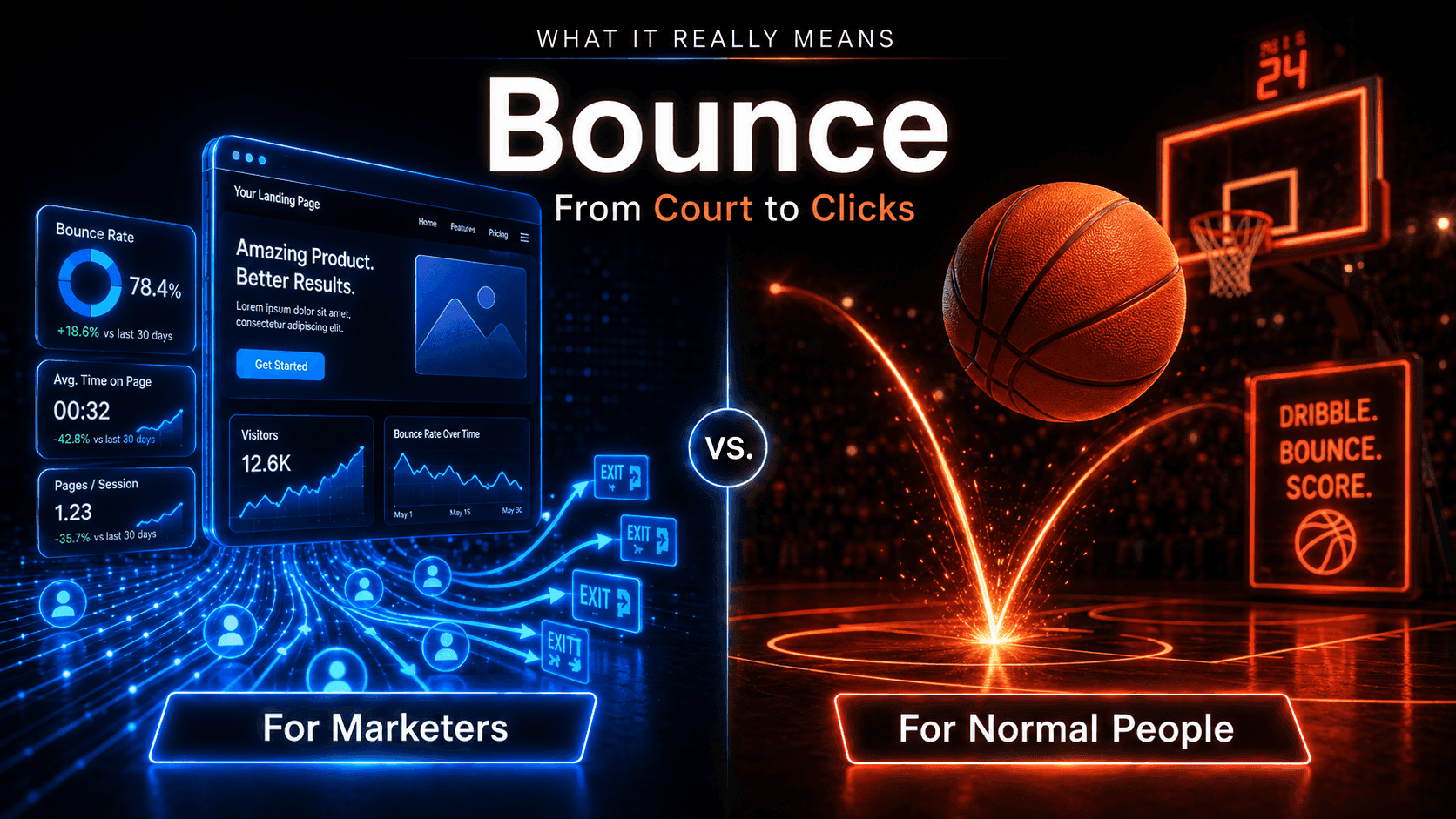
Let's talk about "bounce." For normal folks, it's usually a good thing. A basketball doing a happy little thwack before swishing through the net. Your kid is expertly kneeing a soccer ball. Or maybe it's you, heroically "bouncing back" after that extra-large pizza last night. It's energetic, positive, and vaguely athletic.
Then there's the marketing world. Dun dun DUUUUN! In digital marketing, "bounce" is typically met with the same level of enthusiasm as a surprise tax audit. It's that pesky number in your analytics reports that sends marketers into a cold sweat. Because, you see, in their world, "bounce" doesn't mean something came back better. It means someone ran away. Fast. This article, bless its little marketing heart, attempts to bridge the chasm between our bouncy, happy world and their anxiety-inducing digital one. We're here to explain what "bounce rate" means to those obsessed marketers in 2024/2025, and maybe, just maybe, drag you, the "normal person," into this wonderfully confusing digital phenomenon. Spoiler alert: it's not just about semantics; it's about whether your website is more like a fun trampoline park or a creepy, deserted alley. What Is Marketers' "Bounce Rate" Obsession?
-
What Is Marketers' "Bounce Rate" Obsession? Forget the basketballs for a second (unless you're thinking of a ball that just rolls off the court and disappears). In its simplest, most soul-crushing form, bounce rate is the percentage of website visitors who land on a page and then leave without clicking on any other links or moving to other pages. They come and "bounce" back to a search engine results page or close the browser tab or window. Bounce rate is just the number of single-page sessions divided by the total number of sessions on that page, multiplied by 100 to get a percentage. A page with a bounce rate of 60% has 100 visitors, and 60 exit the site without interacting with it. This metric only measures single-page sessions. A common misconception is that a "bounce" means the visitor didn't read or engage with the information at all. Even if a visitor spends several minutes reading an article or viewing content but then closes the browser without navigating to another page on the same site, their visit is still categorized as a bounce. Google supports this definition, classifying a bounce as a single-page session. While the definition is simple, the implications can be complex. If a user searches on Google, clicks on a result, lands on a page, and then quickly returns to the search results, Google might interpret this as the user not finding what they were looking for. Google aims to provide users with the most relevant and useful results. If a page consistently has a high bounce rate from search traffic, search engines might infer that it isn't satisfying user intent for those specific queries. This inference could indirectly influence the page's search engine ranking. Bounce rate is one of many user experience signals that search engines analyze, not a direct ranking factor. Although calculating bounce rate is straightforward, interpreting it can be challenging. The reasons for a bounce are important but not revealed by the statistic itself. A visitor might leave if the page content is irrelevant or poorly displayed, or conversely, if the page fully answers their question without requiring further navigation. This means marketers must look beyond just the number to understand the "why" behind it, considering factors like page type, traffic source, and user intent. Bounce rate is an indicator, a starting point for investigation, not a final judgment on a page's quality. A "Decent" Bounce Rate in 2024/2025: The Good, The Bad, and The "Oh, For Goodness Sakes, It Depends!" So, you've grasped the concept of bounce rate (or at least you've successfully repressed the urge to throw your computer). Now for the million-dollar question: what's a good or bad number? As with most things in marketing, the answer is a resounding, soul-crushing, It depends! Sure, there are some general benchmarks floating around: 26–40% for excellent, 41–55% for average, and 56–70% for higher than average. Some optimists even suggest that anything below 50% sitewide is good. Bless their innocent hearts. The crucial point is that good is entirely contextual. An acceptable bounce rate depends on the industry, website type, the purpose of the specific page, and the traffic source. For instance, a 50% bounce rate on an e-commerce product page could indicate problems with product display, pricing, or calls to action. However, an informational blog article with an 80% bounce rate might be performing perfectly well if readers get the answer they need, spend several minutes engaging with the content, and leave satisfied. Websites like dictionaries, encyclopedias (think Wikipedia), and news portals often have high bounce rates, frequently around 90%, because visitors arrive to find a specific piece of information and then depart. Industry variation further emphasizes this. In September 2024, Google Analytics 4 (GA4) data showed a median bounce rate of 44.04% across all industries. However, specific industries vary considerably. (Imagine a table here illustrating diverse industry averages.) This wide variation highlights the need for a deep understanding of your audience and sector-specific user experience (UX) considerations. A one-size-fits-all approach to bounce rate optimization rarely succeeds. The differences stem from varying user behaviors and intents within specific businesses. For example, real estate sites tend to have lower bounce rates as visitors browse multiple listings. Blog readers, on the other hand, might find a complete solution on one page and have no need to click further. This means successful marketing strategies must move beyond generic best practices to address field-specific user journeys. The landscape of online analytics is also evolving. Google Analytics 4 (GA4) is increasingly emphasizing Engagement Rate, which provides a more comprehensive view of user involvement than bounce rate alone. The industry median engagement in September 2024 was 56.21%. A major industry player like Google is moving away from potentially misleading single metrics towards a more holistic picture of how people interact with content. This shift suggests that single-page visits aren't necessarily negative and that deeper engagement signals are more valuable. Marketers must adjust their reporting and analysis to these newer, more complete analytics, looking beyond bounce rate to truly grasp user engagement, a critical innovation.
-
Why Do People "Bounce"? Common Suspects Addressing a high bounce rate requires understanding why visitors abruptly leave a webpage, the digital equivalent of hitting the eject button. Usually, it's a combination of factors. Experienced industry professionals identify several common culprits: Slow Page Load Speed: In today's instant-gratification world, visitors quickly lose patience. If a website takes more than three seconds to load, many will abandon it. This is similar to waiting in a physical line; impatience leads to abandonment. Statistics show that a 10-second website load time delay can increase bounce rate by 123%. Poor Mobile Experience: With over 60% of global website traffic expected to come from mobile devices in 2024, a site not optimized for smaller screens is set to fail. Smartphone users are likely to bounce if text, buttons, or navigation are difficult to read, tap, or use. Some studies suggest mobile websites have 16% higher bounce rates than desktop websites. Content Mismatch or Irrelevance: If a page's title, meta description, or advertisement promises one thing but delivers something entirely different, a visitor will be disappointed and leave. Clickbait headlines might generate clicks but often result in high bounce rates. Poor UX or Navigation: A website shouldn't feel like an obstacle course. User frustration can quickly lead to site abandonment due to confusing design, illogical menus, hard-to-read fonts, or a messy structure. If information isn't easily accessible, visitors will look elsewhere. Broken Links or 404 Error Pages: Landing on a broken link or an unhelpful 404 error page can abruptly end a user's journey and force them to bounce. These issues create dead ends and erode trust. Overly Aggressive Pop-ups and Ads: While intelligently placed pop-ups can be effective for conversions, an overwhelming number of them immediately upon a visitor landing on a page can trigger an instant bounce.
However, it's important to remember that not all bounces are "bad." Sometimes, a visitor found exactly what they needed quickly and efficiently on that single page, perhaps a phone number on a contact page, a definition from a glossary, or a specific piece of information from a well-written article. In such scenarios, the bounce indicates mission completion, not page failure. Slow page performance, poor mobile usability, and low-quality or irrelevant content are key contributors to high bounce rates, impacting both SEO and user satisfaction. Addressing these fundamental problems often improves other marketing metrics and overall business goals. Enhancing page load speed, for example, can lower bounce rate, improve search engine visibility, increase time on site, encourage more pages per session, and boost conversion rates. This interconnectedness makes investing in basic site improvements a smart business decision. Most high bounce rates stem from a failure to meet user expectations or to provide a seamless, intuitive experience. Customer-centricity is paramount in digital marketing, and bounce rate is one of many indicators of how satisfied your website visitors are.
-
The Evolution of "Bounce": GA4 and Engagement Digital marketing is constantly evolving, and so too must the metrics and tools used to measure success. With the widespread adoption of Google Analytics 4 (GA4), the latest in web analytics technology, "bounce" is being measured and interpreted differently. GA4 gently prompts marketers to broaden their thinking beyond simple "Bounces" and "Non-Bounces" by focusing on event-based data. Unlike Universal Analytics, which was session-based, GA4 captures more user interactions as "Events". Rather than simply tracking whether a visitor left after viewing one page, it tracks specific behaviors such as watching a video, scrolling down a page, downloading a file, or clicking a feature. Even if users don't click through to another page, this event-driven approach still provides more detailed data into their engagement with the content. GA4 prominently highlights "Engagement Rate." A session is considered "engaged" if the user views more than one page, stays on a single page for more than 10 seconds, or completes a crucial conversion event. This metric offers a more positive and nuanced view of user involvement than bounce rate. It acknowledges that even one-page visits can involve valuable interactions. It's like moving from a "pass/fail" grade to a more comprehensive report card that identifies strengths and areas for improvement. GA4 aims to provide a more complete picture of user behavior. This advancement doesn't render bounce rate obsolete; it still provides useful contextual information in GA4 (though it might need to be manually added to standard reports). However, it's clear that the focus on user involvement is becoming more comprehensive. This adjustment aligns with an industry trend toward prioritizing meaningful interaction over simple pageviews. This development is driven by changing user behavior (such as complex, cross-device customer journeys) and privacy concerns (leading to decreased use of third-party cookies). Therefore, marketers must build strategies that protect user privacy while obtaining relevant interaction data across the entire customer journey, not just website sessions. As AI becomes increasingly important in content creation, user experience personalization, and predictive analytics, systems like GA4 will require more detailed event data. Training AI models and accurately measuring AI-driven marketing strategies depends on rich, granular user interaction data. Event-based analytics is both a response to digital shifts and a foundational element for AI-powered marketing. Those who master this new data paradigm will be better equipped to fully leverage AI.
-
Bounce Rate Mythbusters: Clearing the Air Like any commonly discussed metric, bounce rate is surrounded by myths and misunderstandings. It's time to clarify some common marketing fallacies. Myth 1: High Bounce Rates Are Always Bad. Fact: This is perhaps the most widespread misconception. As discussed, a high bounce rate isn't inherently negative. If a user finds exactly what they need (such as a contact number, a glossary definition, or a quick answer from a detailed blog article) and leaves satisfied, the page has succeeded. Many experienced marketers recall FAQ pages with 90% bounce rates; while seemingly high, if analytics showed users spending several minutes on that page, it meant they were actively reading and finding solutions. In such cases, a high bounce rate indicates efficiency, not failure. Myth 2: Google Ranking Directly Depends on Bounce Rate. Fact: Google has explicitly stated that bounce rate is not a direct ranking factor. Google evaluates page relevance and quality using a multitude of user experience signals. A consistently high bounce rate, especially from search traffic, may suggest to Google that a page isn't meeting searcher intent (which Google highly values), but it doesn't directly impact search rankings. Google's primary focus is on search intent and content relevance. Myth 3: Bounce Rate and Exit Rate Are the Same. Fact: These metrics are related but measure distinct things. While all bounces are exits, not all exits are bounces. Bounce rate solely focuses on single-page sessions, sessions where a user leaves the site after viewing only the entry page. Exit rate, on the other hand, indicates the percentage of site visitors who left a particular page, regardless of how many pages they visited prior. A page can have a low bounce rate but a high exit rate. For instance, a "thank you for your purchase" page or a "contact form submitted" page are typical exit destinations, and a high exit rate from them is expected. These fallacies highlight a broader issue in digital marketing: the tendency to oversimplify complex indicators in pursuit of easy answers, especially when return on investment (ROI) is a concern. Debunking these myths promotes a more nuanced, critical, and analytical approach to data interpretation. Understanding the distinction between bounce rate and exit rate is crucial for diagnosing user journey difficulties. If a critical page deep within a conversion funnel (like the second step of a checkout process) has a high exit rate but a low bounce rate (meaning users arriving directly on that page from external sources aren't the problem), the issue likely lies with that specific step, not the initial landing experience. Therefore, a comprehensive analytics strategy must investigate multiple data points, including both bounce and exit rates, to understand user flow and identify friction points.
-
From Jumping Off to Staying: 2024/2025 Must-Haves Understanding bounce rate is one thing; actively improving it is another. Several proven tactics can help marketing teams reduce bounce rates. These are fundamental to a good user experience, not just quick fixes. 1- Master First Impressions: Content Is Still King! Ensuring that page content aligns with visitor expectations is crucial for lowering bounce rate. Does the material fulfill the promise of the search result, ad, or link? Effective headlines and introductory paragraphs are vital. Avoid "clickbait" titles and descriptions, as they will only increase bounces. A "people-first content" approach, creating useful, well-structured, and user-focused information, is essential. 2- Seriously, Speed Matters: Page load speed is critical. If a page loads slowly, users may leave before the content even appears. Aim for a load time under three seconds, especially for mobile users. This can be achieved by optimizing images (compressing them without losing quality), utilizing browser caching, minifying HTML, CSS, and JavaScript, and using a Content Delivery Network (CDN) to serve content from servers closer to the user. With careful performance tuning, bounce rates can often drop by 10–15% almost immediately. 3- Don't Overthink UX & Navigation: A website should be intuitive, not confusing. User engagement depends on clear menus, intuitive navigation, and a well-organized site layout. Given the prevalence of mobile browsing, mobile-first design is no longer a recommendation but a necessity; comprehensive testing across various devices and screen sizes is essential. Readability is also key: font choice, color contrast, short paragraphs, and formatting elements like bullet points can make text easier to consume and less overwhelming. 4- Provide Reasons to Explore: Internal Links & CTAs The end of a page shouldn't be a dead end. Strategic internal links that guide readers to other relevant information on the site can significantly reduce bounce rates by encouraging further exploration. Clear and compelling Calls to Action (CTAs) are also crucial. Visitors need to know what to do next, and the CTA should be obvious and appealing. As a last resort, well-designed exit-intent pop-ups that offer genuine value (such as a discount, a relevant downloadable guide, or an invitation to subscribe) can sometimes be effective. 5- Technical Checkup: Regular technical audits are a must. Find and fix broken links (which lead to frustrating 404 error pages), and make sure your 404 pages are helpful by including a search bar or links to popular sections of the site, rather than just an error message.
The most effective bounce rate reduction solutions are generally part of a holistic user experience optimization strategy. Improving page speed, for instance, typically boosts overall user satisfaction and encourages more site exploration. This interconnectedness means that improving bounce rate often involves creating a seamless and valuable user journey. Many of these changes not only lower bounce rates but are also excellent practices that should be applied from the very beginning of website design and content strategy. This shifts the strategy from reactive problem-solving to continuous improvement, which is vital in digital marketing.
Final Thoughts: Enjoy Both Bounces! From the joyful, lively bounce of a soccer ball to the sometimes-stressful, analytical "bounce" of a website visitor, the word "bounce" truly has a remarkable range. One demonstrates physical energy and vibrant interaction, while the other reveals digital user activity and provides critical marketing insights.
For marketers, understanding a website's bounce rate goes beyond mere numbers. It's about comprehending the audience, their intentions, and why they chose to stay or not. A high bounce rate isn't always an indication of failure or disappointment. Instead, it can be a valuable signal for opportunities to improve the user experience. Reducing a high bounce rate requires ongoing testing, learning, and refinement. Whether the goal is to keep a ball in play during a game or to keep a website user engaged, engagement is fundamental. By providing value, maintaining a frictionless experience, and understanding user needs, marketers can transform what might seem like a negative "bounce" into meaningful interactions.
What's the most surprising thing you've learned about your website's bounce rate, or what "bounce" challenge are you currently facing? Share your unique experiences in the comments below!
Stay updated on tech trends
Join our mailing list for exclusive insights and practical tech advice delivered to your inbox.
Other Blog Posts














For Businesses
Need expertise on your next technical challenge? our team is here to help.
Mary Massoumi
Mary Massoumi
Marketing Director (15+ years) exploring new tools/techniques. Daily insights on AI, MarTech, social media & ads
Impressions: Ad Views vs. First Impressions — What It Really Means for Marketers vs. Normal People
Posted by Mary Massoumi |.August 30 2026
Custom Software Development vs. No-Code vs. Off-the-Shelf: How Startups Should Decide
Posted by Mary Massoumi |.June 11 2026
Traffic: Homepage Hits vs.Headache-What It Really Means for Marketers vs. Normal People
Posted by Mary Massoumi |.March 22 2026
You May Also Like
M Powered Ventures supports startups and companies by providing world-class tech expertise.
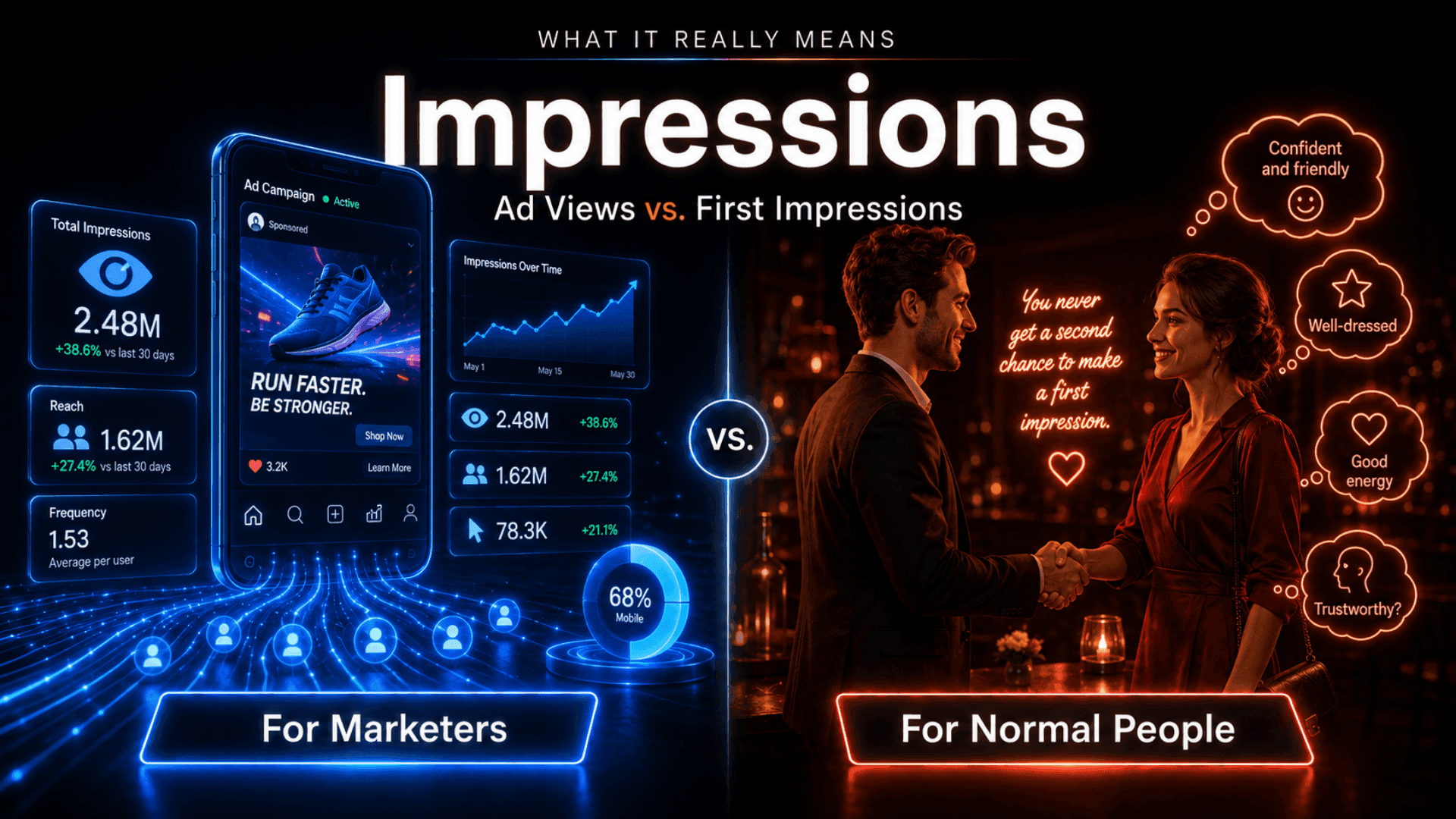
Impressions: Ad Views vs. First Impressions — What It Really Means for Marketers vs. Normal People
Impressions mean more than ad views. Discover the difference between advertising impressions and real first impressions—and what marketers should measure beyond the numbers.
Mary Massoumi · August 30 2026
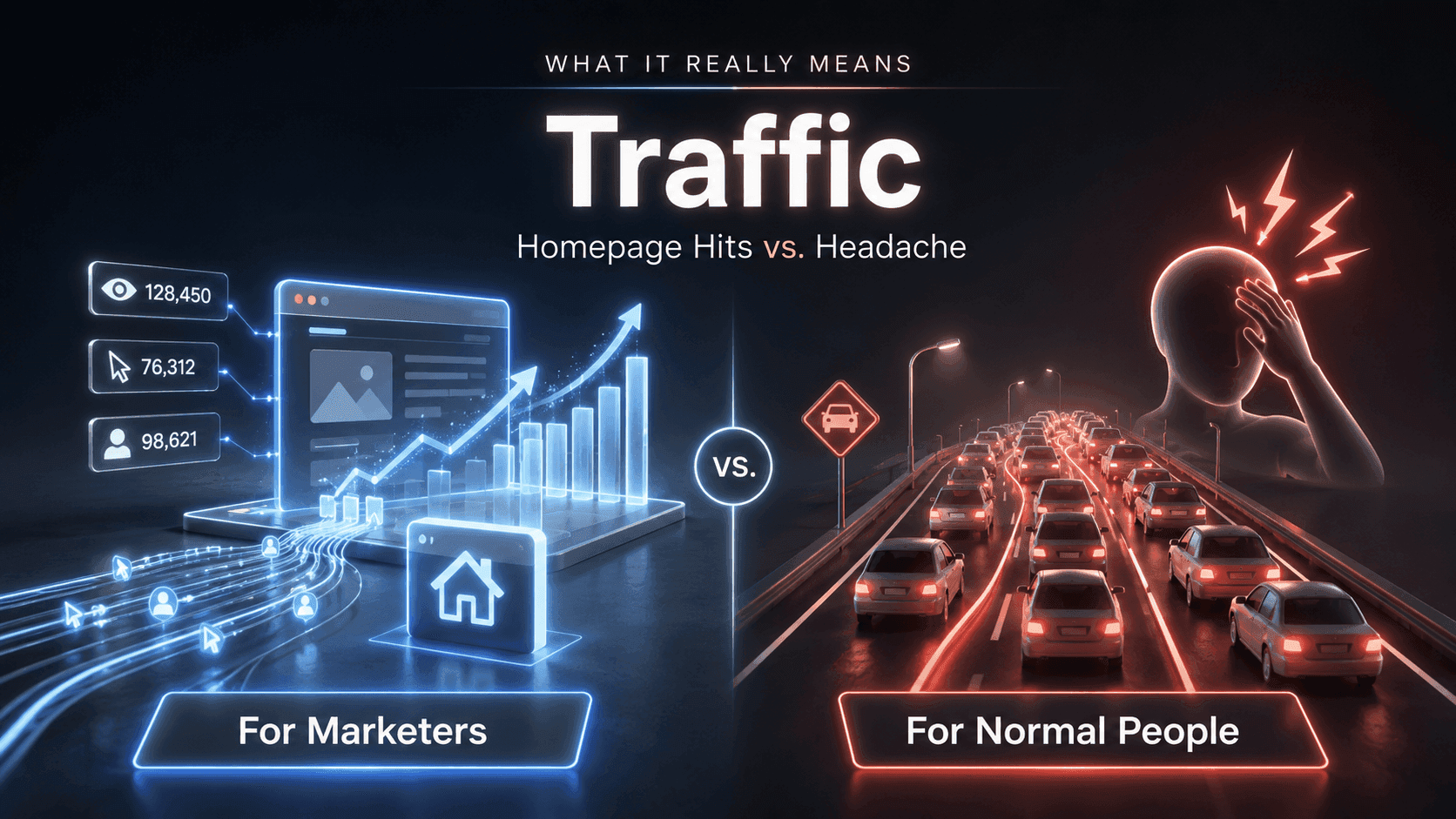
Traffic: Homepage Hits vs.Headache-What It Really Means for Marketers vs. Normal People
A marketing director's humorous take on the dual meaning of "traffic" - exploring why marketers celebrate website traffic while everyone else dreads road traffic, plus 2025 web traffic trends and optimization strategies.
Mary Massoumi · March 22 2026 · 3
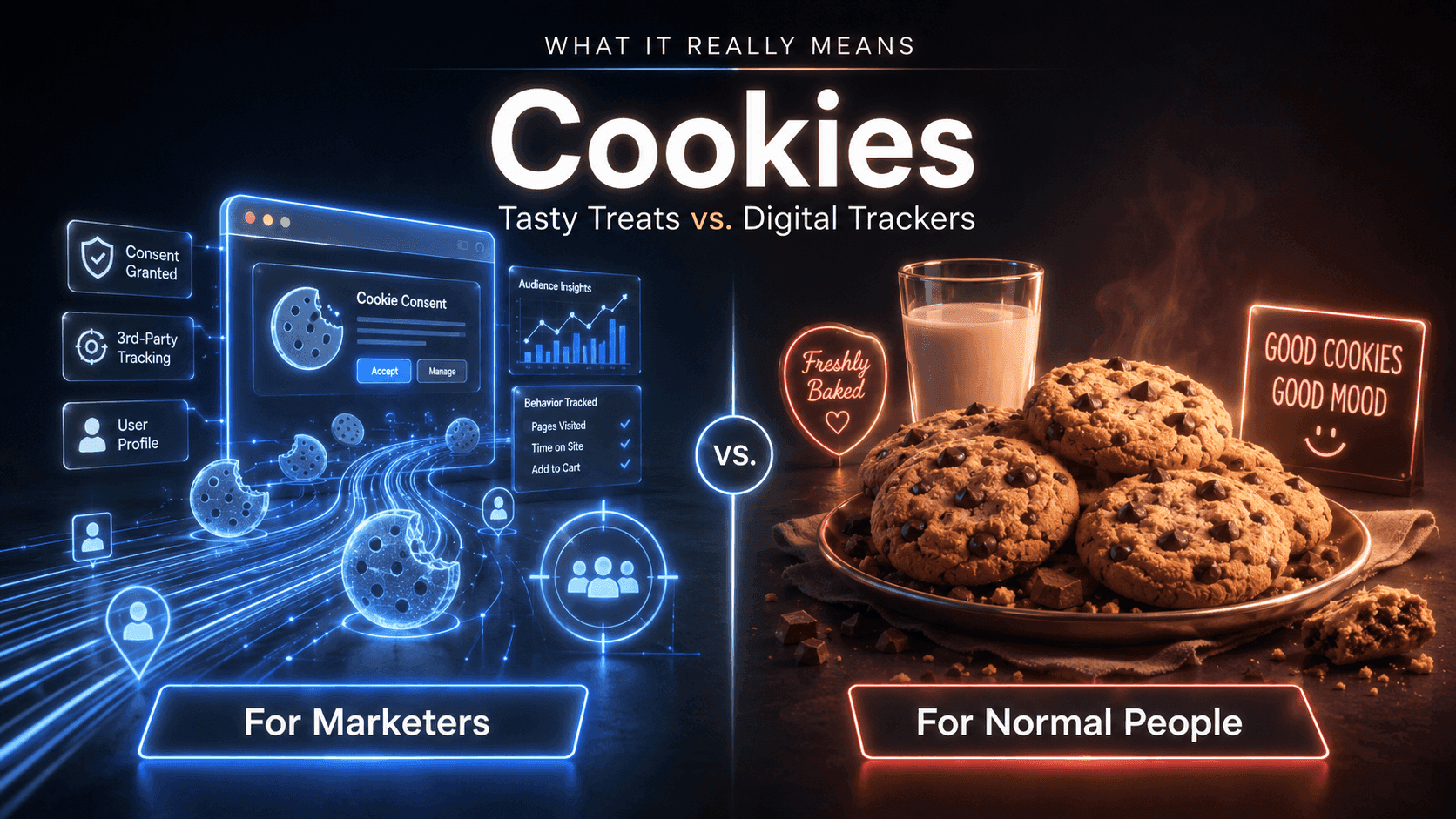
Cookies: Tasty Treats vs. Digital Trackers-What It Really Means for Marketers vs. Normal People
A humorous yet insightful exploration of how marketers and consumers view "cookies" differently. from chocolate chip treats to digital tracking technology, and how the cookieless future is reshaping digital marketing strategies.
Mary Massoumi · March 22 2026 · 7
Have questions about implementing these ideas?
We're here to help.Contact Usfor a free consultation orPitch Your Startupif you're looking for a technical co-founder.
