
Development


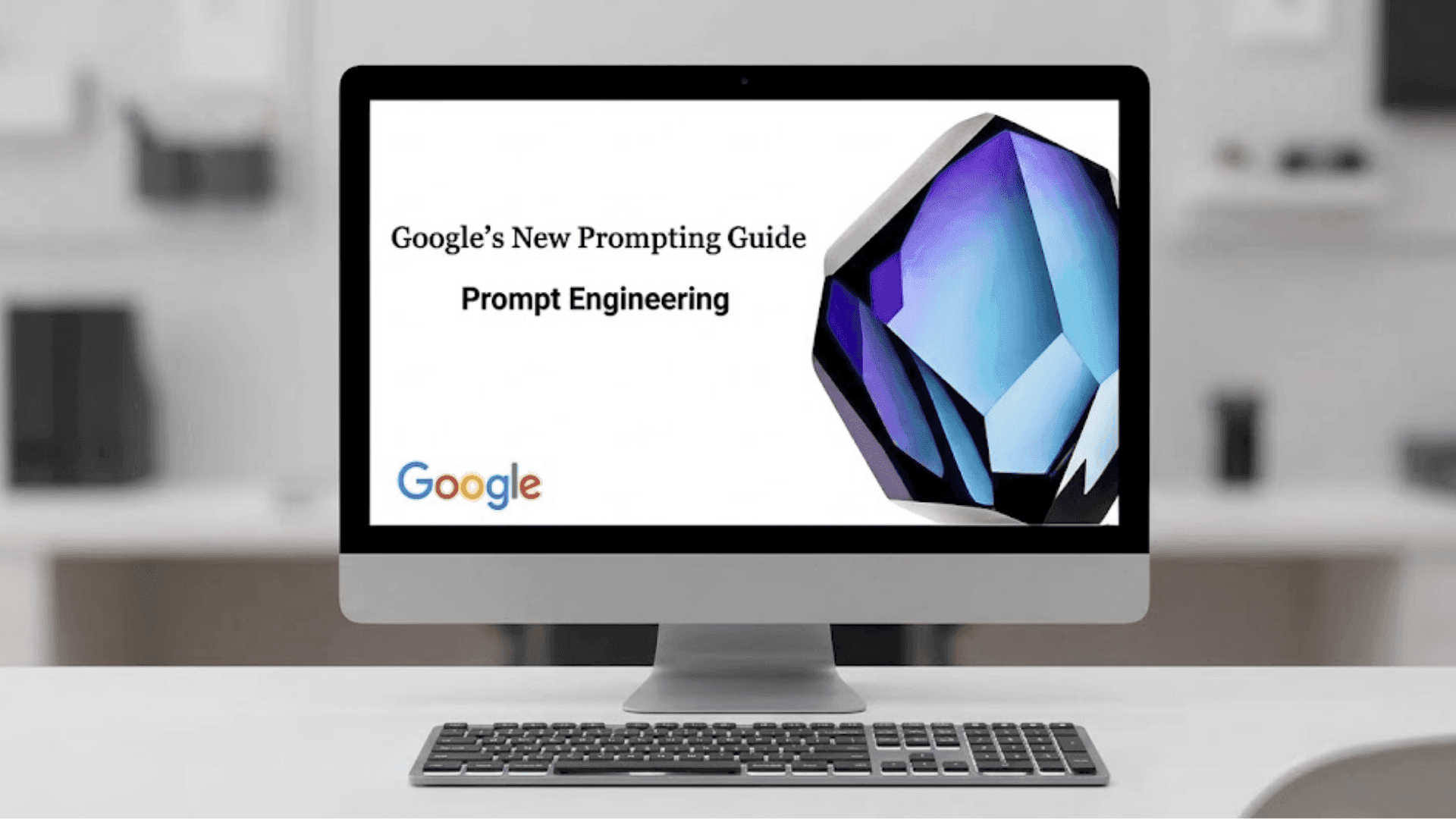
I’ve been fascinated by the trajectory of AI-driven tools for a while now, from how generative language models reshape our ad campaigns to the way they can whip up entire social media strategies with just a few keystrokes. But something I noticed early on is that the quality of AI’s output almost always boils down to the quality of our prompts. Now Google has stepped in with a free resource on exactly that — prompting — and it’s packed with real examples and advanced techniques.
Here’s the best part: it’s free to download (no paywalls, no signups), meaning anyone can grab it and start learning how to craft better prompts. I see this as a significant moment for anyone in marketing or tech. Let me share why.
- Leveling the Playing Field for AI Adoption For years, effectively using AI tools often felt like a mysterious art form. You’d hear industry pros talk about “zero-shot prompts,” “chain-of-thought reasoning,” or “Tree of Thoughts” as though these were arcane secrets. Google’s new guide demystifies these concepts. It walks you through:
Zero-Shot Examples Zero-shot learning basically means giving the model a task without prior examples. The guide shows how to phrase these types of prompts clearly so you can generate consistent results without lengthy instructions or multiple clarifications. CoT (Chain-of-Thought) Reasoning CoT is all about letting the model show its “thinking” or reasoning steps. For marketing tasks — like planning a campaign with multiple variables (target demographics, calls to action, budgeting)—CoT helps you see how the AI arrives at its suggestions. ReAct ReAct combines reasoning and action inside the prompt. This can be a powerhouse for scenario planning or problem-solving in marketing. Imagine the AI not just spitting out suggestions but also stepping through logical reasoning while solving the problem. Tree of Thoughts This technique is all about brainstorming multiple possible routes or solutions in a tree-like format. It can be a goldmine for creativity. Marketers needing campaign concepts, brand messaging, or ad variations could benefit immensely from a prompt pattern that explores multiple angles simultaneously. The fact that Google’s guide lays it all out in simple language — complete with examples — means that even if you’re just getting your feet wet with AI, you can learn how to use these advanced techniques. There’s no barrier to entry.
- Why This Matters for Marketers I’ve spent over a decade in marketing, and if there’s one thing I’ve learned, it’s that new tools are only as powerful as the people who wield them. Here’s how the guide can make an impact:
Better Copy and Messaging Getting AI to produce engaging, on-brand copy is a challenge when the prompts are vague. If you refine your prompts, the output starts to read like it’s been penned by a seasoned copywriter. Small improvements in prompts can mean huge leaps in the AI’s voice and alignment with your brand. Enhanced Creativity Many of these prompting strategies — like “Tree of Thoughts” or “CoT” — are basically forms of structured brainstorming. As a marketer, you can generate multiple ad headlines, campaign angles, or social content types in one go, then choose the best. It’s like having a digital brainstorming partner. Time Savings The greatest frustration I see in adopting AI is wasted time when the model outputs irrelevant or repetitive content. Prompt refinement drastically cuts down on back-and-forth. You spend less time in trial-and-error mode and more time acting on valuable insights. Skill Building Across the Team This guide isn’t just for “power users” or developers. Anyone in the organization — social media coordinators, content strategists, or junior copywriters — can harness these prompting patterns. It ensures you’re all speaking the same language when interfacing with AI.
AI addresses code-specific prompts 3. The Technical Edge for Coders The guide also includes prompt patterns for coding tasks. Whether you’re a front-end developer or a full-stack engineer, writing precise prompts can drastically improve AI-assisted coding sessions. The sections that address code-specific prompting are crucial because:
Debugging Assistance You can ask the AI to outline potential bug causes using chain-of-thought reasoning. It helps systematically break down your code, rather than offering generic fixes. Generating Code Snippets By understanding advanced patterns, you can instruct the AI to produce functional, well-structured snippets that integrate seamlessly with your existing codebase. Learning and Documentation If you’re diving into a new library or framework, using these advanced prompting methods can generate better examples and explanations. This accelerates onboarding and skill-building. 4. How to Access and Why You Should Share You can find the guide here. As noted, there’s no signup and no paywall. Just download it.
Why share it further? Quite simply, prompt literacy is going to be a core skill set for many fields. Whether it’s marketing, software development, or data analytics, the ability to leverage AI effectively can boost productivity and catalyze innovation. By reposting or forwarding the PDF to your colleagues, you help them ramp up faster. And this knowledge is coming straight from Google — so it carries a certain weight and up-to-date credibility that other scattered, user-generated tutorials might not.
- Final Thoughts We’re at a pivotal moment in AI’s evolution. As the technology becomes ever more integrated into business processes, the defining factor for real success will be how well we can communicate with these models. Google’s new prompting guide acts like a crash course in advanced AI communication skills. Whether you’re a seasoned marketer or a coder wanting to optimize your workflow, mastering these techniques will give you a competitive edge.
If you haven’t yet, grab a copy and experiment. Prompt your AI tool with zero-shot, CoT, ReAct, and Tree of Thoughts approaches. See how the results differ and how you can refine them. Then share your findings — both successes and failures — so we can all learn together. The more we collectively improve our prompt-crafting, the better and more creative our AI outputs become.
Question for You: Have you downloaded Google’s prompting guide yet? If so, which technique are you most excited to try in your work? Let me know, and let’s keep raising the bar on our AI game — together.
Stay updated on tech trends
Join our mailing list for exclusive insights and practical tech advice delivered to your inbox.
Other Blog Posts












For Businesses
Need expertise on your next technical challenge? our team is here to help.
M Powered Ventures Editorial Team
Founder of startup x


M Powered Ventures Editorial Team
Founder of startup x
M Powered Ventures editorial team

Startup Accelerator vs. Seed Funding for Tech Startups: Which Path Is Right for You?
Posted by M Powered Ventures Editorial Team |.July 25 2026

Startup Accelerator or Mentor Network? How Founders Should Choose the Right Growth Support
Posted by M Powered Ventures Editorial Team |.July 25 2026

Technical Roadmap Template for Founders Before Building a Product
Posted by M Powered Ventures Editorial Team |.July 25 2026
You May Also Like
M Powered Ventures supports startups and companies by providing world-class tech expertise.


Have questions about implementing these ideas?
We're here to help.Contact Usfor a free consultation orPitch Your Startupif you're looking for a technical co-founder.
