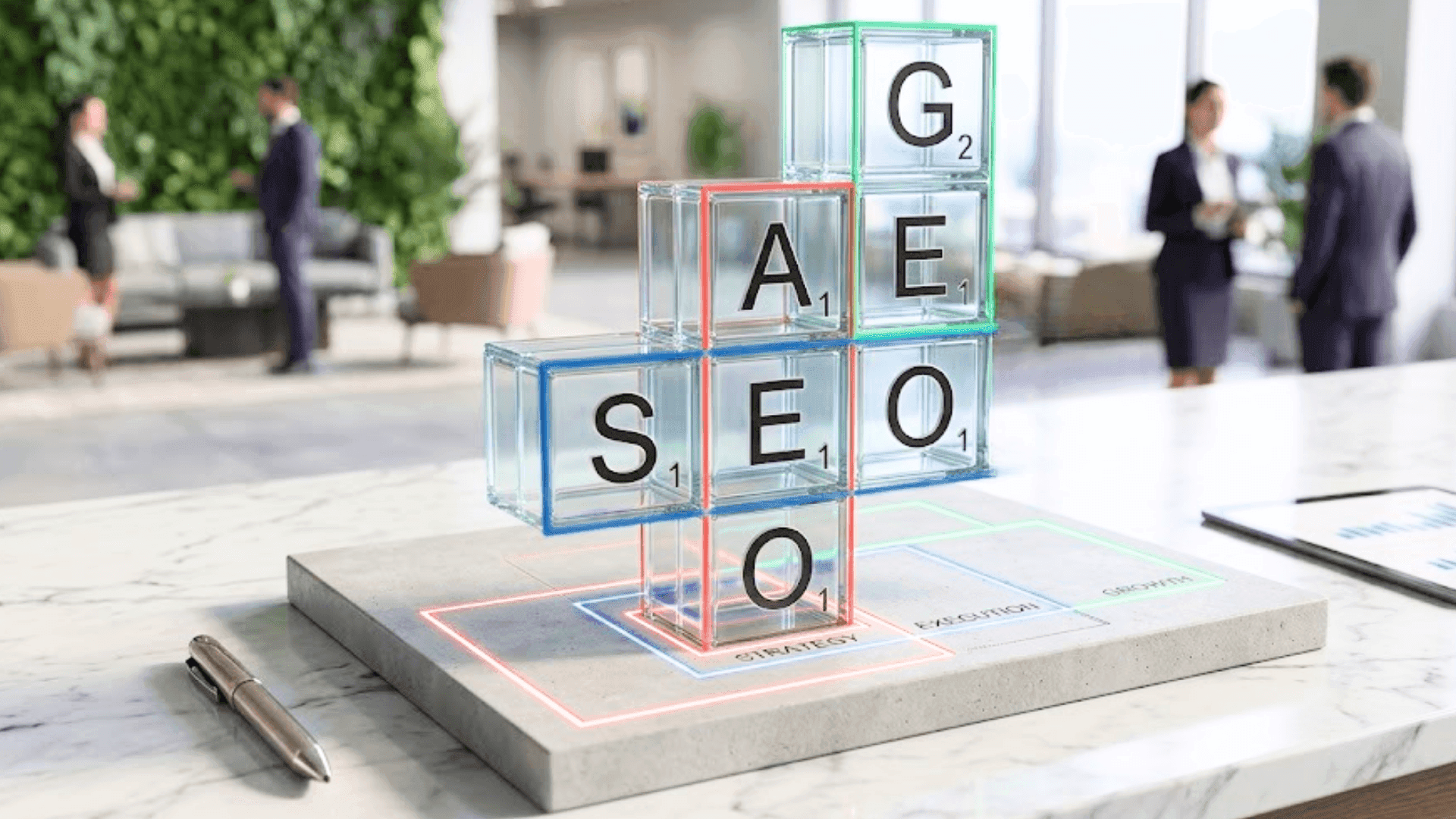

Strategy


Decoding the Future of Search and Content Optimization Digital marketing has evolved dramatically in the past decade, and I’ve watched it go from keyword stuffing to voice search and now on to AI-generated search experiences. If you’re like me — someone who’s spent years perfecting the ins and outs of search engine optimization (SEO)—you’ve likely noticed how much the landscape has shifted. Search is no longer exclusively about Google’s “ten blue links”; it’s about how a wide array of platforms (voice assistants, AI chatbots, generative search engines) retrieve and present information.
That’s where terms like AEO (Answer Engine Optimization) and GEO (Generative Experience Optimization) enter the conversation. Let’s dig into SEO, AEO, and GEO — what they are, how they overlap, and why they matter for modern marketers.
- What Is SEO?
SEO: Process of improving website visibility. Search Engine Optimization (SEO) is the classic approach to improving a website’s visibility in search engine results pages (SERPs). Whether it’s Google, Bing, or another search engine, SEO aims to rank your pages higher and attract organic traffic that converts into leads or sales.
On-page SEO: Keywords, meta descriptions, header tags, and user-friendly site structure. Off-page SEO: Link-building from reputable sites, social signals, and consistent brand mentions. Technical SEO: Enhancing site speed, mobile responsiveness, and crawlability. Local SEO: Targeting location-based queries (e.g., “coffee shop in Boston”). Content Optimization: Crafting high-quality content that resonates with both readers and algorithms. Why It Matters: SEO remains one of the most cost-effective digital marketing strategies. When done right, it funnels ready-to-convert prospects to your site without paying for every click. As search engines evolve, SEO also evolves — but its foundational best practices (like creating valuable content and ensuring a top-tier user experience) remain crucial.
- What Is AEO?
AEO: Answer Engine Optimization (Google, Siri, Alexa) Answer Engine Optimization (AEO) is about positioning your content to be the go-to resource for AI-powered search experiences — think Google’s featured snippets, Siri’s spoken answers, or Alexa’s quick responses. Unlike traditional SEO, which might focus on ranking your entire webpage, AEO aims to provide direct and concise answers so these digital assistants (and Google’s own quick-answer boxes) can serve your content immediately.
Focus on Direct Answers: Content is structured to answer very specific queries succinctly — like “What’s the best time to post on Instagram?” Optimization for Voice & Conversational Search: People ask voice assistants questions differently than they type. Adapting for this nuance (e.g., using natural language, question-and-answer formats) is central to AEO success. Enhanced Visibility: Being selected as a featured snippet or knowledge panel result can skyrocket your brand’s presence — even if the user never clicks through to your site. Why It Matters: Today’s consumer wants instant answers. AEO ensures your brand surfaces at the top of those results. It requires you to know your audience’s pain points and to deliver ultra-targeted, easily digestible information. The direct benefit? You become the authority in a user’s mind right when they need a solution.
- What Is GEO?
GEO: Generative Experience Optimization (ChatGPT, Gemini, Perplexity). Generative Experience Optimization (GEO) is the new kid on the block. As chatbots like ChatGPT, Google’s Gemini (in beta), and platforms such as Perplexity.ai become more integrated into search, GEO is about structuring content so these AI-driven systems can quickly interpret, synthesize, and present it to users. In short, it’s an evolution of SEO and AEO, but tailored to large language models (LLMs) and advanced AI search engines.
Structured Content: Clear headings, well-organized sections, bullet points, and consistent formatting make it easier for AI to parse your content. Conversational Style: AI-driven tools often rely on a natural, question-and-answer flow, so writing in a human-sounding style helps these tools find direct, relevant insights. E-E-A-T Focus: Experience, Expertise, Authority, and Trustworthiness (E-E-A-T) remain central. AI crawlers look for signals that confirm you’re a credible source, such as cited references and author credentials. Why It Matters: AI search engines are becoming a primary “front door” for people seeking information. If your content isn’t in a format AI can easily retrieve or lacks signals of credibility, you risk being overshadowed by competitors. GEO is all about proactively structuring and tailoring your content so you don’t get left behind as AI-powered searches grow.
- Similarities Across SEO, AEO, and GEO You might be wondering: Isn’t this just search engine optimization with fancy new acronyms? In some ways, yes. All three share common goals and best practices:
Boosting Online Visibility — Whether it’s a search result, featured snippet, or AI-generated answer, your objective is to appear at the top. Matching User Intent — Every approach requires understanding what your audience is really looking for — and then giving them exactly that. Clear Content Structure — Organized headings, bullet points, and logical flow. If humans love well-structured content, AI does too. Technical Enhancements — Fast loading times, mobile-friendliness, valid schema markup — technical health underpins all forms of optimization. Building Credibility — E-E-A-T is at the heart of each approach. Your content needs to reflect real experience, expertise, and trustworthiness in the eyes of search engines (and by extension, your audience). 5. Differences That Set Them Apart Where these three approaches really differ is in the context of the search and the type of result:
SEO: Broad, organic search strategy for traditional SERPs. Focuses on ranking entire webpages for a variety of keywords. Relies heavily on link-building, on-page optimization, and user experience signals. AEO: Laser-focused on concise answers for voice or featured snippets. Emphasizes microdata, FAQ sections, Q&A formats, and question-oriented long-tail keywords. Prioritizes immediate clarity and directness. GEO: Optimizes content specifically for AI-driven search engines and chatbots that rely on large language models. Structured formatting and natural language style help AI parse and generate summarized answers. Relies heavily on E-E-A-T, as AI engines prefer to source from credible experts. 6. Making Them Work in Harmony Realistically, successful marketers combine SEO, AEO, and GEO into one cohesive strategy. Here’s how:
Create a Solid SEO Foundation Before diving into specialized optimizations, ensure your site has strong fundamentals — metadata, fast load times, high-quality backlinks, and a smooth user experience. Build AEO-Focused Content Add Q&A or FAQ sections to your site. Incorporate short paragraphs that directly answer common questions. Use schema markup to help search engines identify your content as prime snippet material. Structure for GEO Write in a natural, conversational style that AI chatbots can easily pull from. Use headings and bullet points to make your text more “AI-friendly.” Don’t forget to demonstrate your trustworthiness with clear authorship, authoritative sources, and relevant credentials. Ongoing Testing & Measurement Check how your site appears in AI-driven answers or if your content is included in knowledge panels. Track your click-through and engagement rates for both classic SERPs and voice/AI-based queries. Stay Current AI innovations happen at light speed. Keep tabs on major updates to search algorithms, voice assistants, and AI platforms so you can continuously refine your approach. 7. Final Thoughts In the grand scheme of digital marketing, SEO, AEO, and GEO aren’t competitors; they’re complementary layers. We’re not just optimizing for Google anymore; we’re optimizing for how humans ask questions and how AI interprets them. For those of us who’ve been in the marketing trenches for over a decade, this is both thrilling and challenging. We have to maintain the proven principles of SEO while adopting new structures and best practices for AI-driven environments.
Remember, the ultimate goal is still the same: connect people to the right information at the right time. Whether it’s typed, spoken, or chatbot-driven, relevancy is king. By layering your strategy — focusing on SEO fundamentals, offering concise answers for AEO, and making your content generative-friendly for GEO — you can capture audiences wherever and however they search.
Question for You: How are you adapting your content and SEO strategies to accommodate voice search, AI chatbots, and new generative search models? Are you seeing results or is it still an experiment? Share your experience — I’d love to hear what’s working (and what’s not) as we all navigate this evolving landscape together.
Stay updated on tech trends
Join our mailing list for exclusive insights and practical tech advice delivered to your inbox.
Other Blog Posts











For Businesses
Need expertise on your next technical challenge? our team is here to help.
Mary Massoumi
Mary Massoumi
Marketing Director (15+ years) exploring new tools/techniques. Daily insights on AI, MarTech, social media & ads
Impressions: Ad Views vs. First Impressions — What It Really Means for Marketers vs. Normal People
Posted by Mary Massoumi |.August 30 2026

Custom Software Development vs. No-Code vs. Off-the-Shelf: How Startups Should Decide
Posted by Mary Massoumi |.June 11 2026

Traffic: Homepage Hits vs.Headache-What It Really Means for Marketers vs. Normal People
Posted by Mary Massoumi |.March 22 2026
You May Also Like
M Powered Ventures supports startups and companies by providing world-class tech expertise.

Have questions about implementing these ideas?
We're here to help.Contact Usfor a free consultation orPitch Your Startupif you're looking for a technical co-founder.
