
Strategy


Ever overhear a conversation where one person raves about “organic” and another person nods along, thinking about something entirely different?
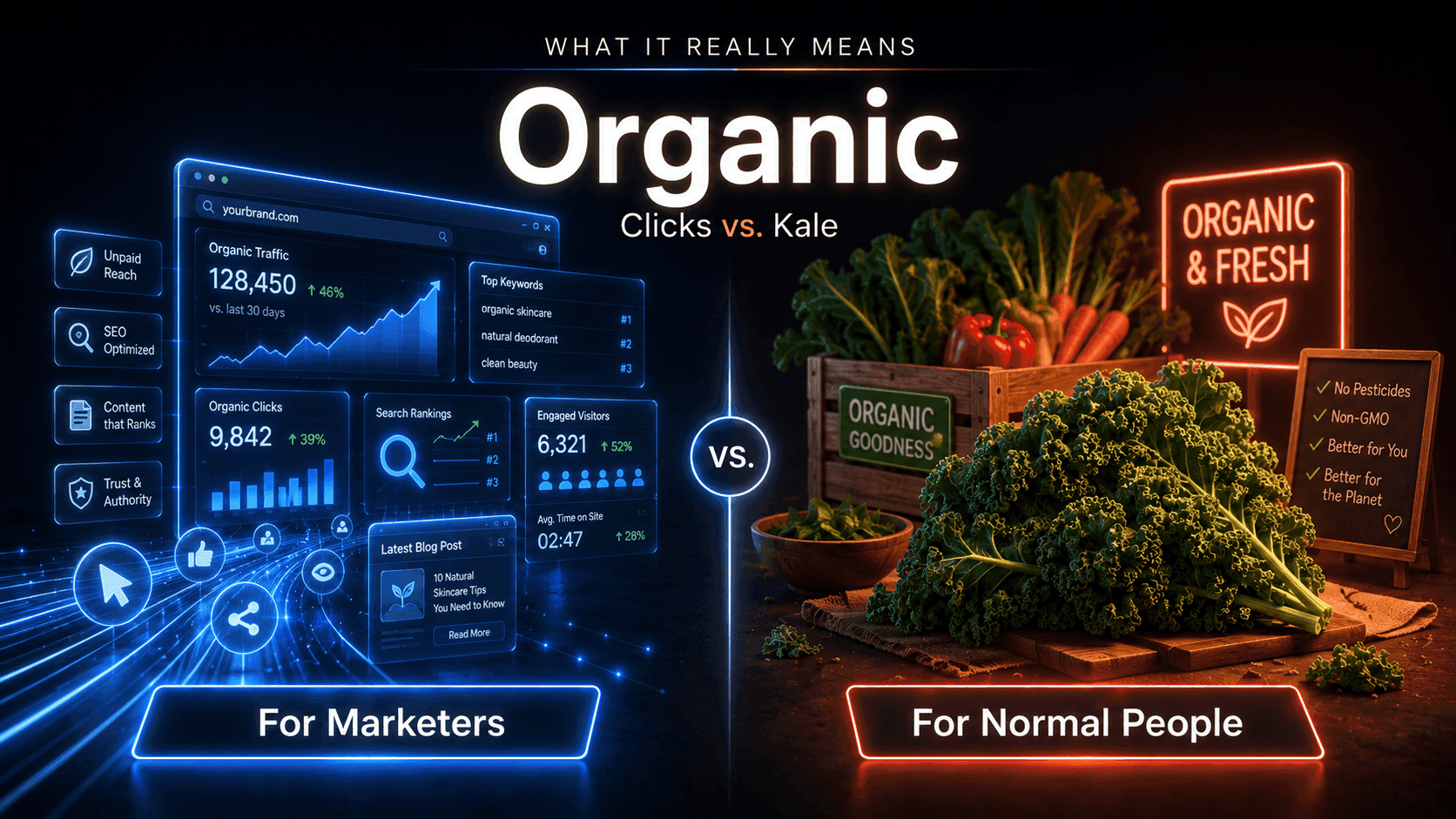
As a seasoned marketing director, I live in both worlds. To the general public, organic is all about farm-fresh veggies and that Whole Foods lifestyle. To marketers, organic means traffic and content that grow without paying a penny to Big Tech. The term "organic" evokes widely disparate images, with one focusing on compost and the other on content calendars. Let’s dig in—with a dash of humor—to see how “organic” plays in produce aisles versus marketing meetings.
- Organic to the Public: Fresh Produce, Pure and Simple For most people, “organic” is about food grown without synthetic chemicals or GMOs, often associated with better health and environmental responsibility. Organic food sales in the U.S. topped $70 billion in 2024, with products like organic vegetables, fruits, and dairy becoming mainstream. To consumers, organic means healthier, even if the scientific community has yet to conclusively prove all organic foods are more nutritious.
It’s clear that organic food isn’t just for health nuts anymore. Millennials and Gen Z are the most committed organic shoppers. Nearly 90% of Gen Z surveyed identified as either new or frequent organic consumers, and they’re willing to pay a premium for it. These days, “organic” is more than a label—it’s a movement toward clean eating and a greener planet.
- Organic to Marketers: No Pay, All Play (the Long Game) Now switch to a marketing department on a Monday morning. When I say, “We need more organic,” I’m not suggesting we start a company garden. In marketing-speak, organic content is all about free reach. It refers to strategies that attract an audience naturally, without paid ads. Think search engine optimization (SEO), where your blog post about “10 Ways Kale Boosts Productivity” ranks on Google on its merits. Or social media posts that get likes and shares without a dime spent on promotion. Or your email newsletter that people signed up for voluntarily. In short, organic marketing is growing your brand through content and engagement rather than cutting a check for visibility.
Why do we marketers love “organic” (despite how slow it can be)? Two big reasons: trust and cost. First, content that people find organically—say, via a Google search—has credibility. You’re earning the audience’s attention by being helpful or intriguing, rather than interrupting them with an ad. Such behavior builds trust and loyalty over time, which is marketing gold. Second, organic traffic is (technically) free. Especially for lean teams or startups, the idea of getting customers without paying for each click is irresistible. It’s the classic tortoise in the race: slow and steady content wins loyal fans, even if the hare (paid ads) sprints ahead early.
Let’s talk numbers to see why organic strategies get so much attention in marketing meetings. Over half of all website traffic (about 53%) comes from organic search, whereas only 27% comes from paid search ads. In other words, people mostly click on Google’s regular results, not the sponsored ones, when researching. And those clicks matter—one analysis found B2B companies generate twice as much revenue from organic search than from all other channels combined. (Apparently, when a potential client finds your white paper naturally, they’re more likely to become a real client.) Who knew? With stats like that, it’s no wonder SEO and content marketing remain kingpins in the digital strategy realm. In fact, 9 out of 10 marketers use blog posts as part of their content strategy—basically everyone and their dog is blogging these days, hoping to capture that sweet organic traffic.
However, organic marketing is not without its challenges. Remember the patience required for the growth of organic food? The same applies to content. It can take months for a new blog post to climb the search rankings and start bringing in visitors, whereas a pay-per-click ad can get you traffic this afternoon (if you have the budget!). Also, while organic reach on social media is “free,” the social platforms don’t exactly make it easy. Algorithms can be stingy: in 2024, the average Facebook post reaches only about 2.6% of a page’s followers organically (yes, you read that right), and Instagram isn’t much better at around 4%. Essentially, if you have 1,000 followers, maybe two dozen will see your clever organic post about kale vs. spinach memes. Ouch. That’s why social media managers sometimes feel like they’re shouting into a void unless they toss a coin to Zuck for a boost.
Still, marketers (myself included) can’t quit organic. We’ve adapted with strategies like focusing on SEO content (where we have more control, as Google’s algorithm—though fickle—at least rewards relevance and quality) and building email lists or communities where organic reach is close to 100% (you get every newsletter until you unsubscribe or it lands in spam). Earned attention is increasingly valuable as consumers experience ad fatigue, with about one-third of internet users even installing ad blockers. We know that a loyal audience built organically is more likely to stick around, much like a longtime farmers market customer keeps coming back for that trusted fresh produce.
- Comparing the Two “Organics” (Or, Kale vs. Content) So, how do these two meanings of organic compare? They actually have more in common than you’d think:
It’s all about patience: whether you’re growing heirloom tomatoes or a YouTube channel, organic growth takes time. You can’t rush a crop to maturity overnight—and you can’t rush SEO to put you on Page 1 of Google overnight either. (Many a CEO has asked, “Can we go viral by Friday?” as I sigh deeply, channeling my inner farmer tending the fields.) Quality Over Quick Fixes: Organic farmers focus on quality soil and ingredients, not quick chemical fixes. Marketers focusing on organic reach concentrate on quality content and genuine engagement rather than quick ad blitzes. In both cases, if you put in quality inputs, you get quality outputs—be it nutrient-rich produce or highly engaged customers. Fending Off Pests (and Algorithm Updates): The organic farmer battles bugs without harsh pesticides; the organic marketer battles the whims of algorithms without “paying to play.” Google algorithm changes and social media algorithm tweaks are the pests we contend with. Rather than resorting to financial remedies, we adapt our approach and cultivate our content to weather the challenges. (If you’ve ever seen a site lose traffic after a Google update, it’s the digital marketing equivalent of finding aphids on your lettuce.) Trust and Authenticity: Both organic food and organic content trade on trust. Consumers trust that the organic label means, “This is good for me and the planet.” Likewise, readers/viewers trust organic content more than ads—“This brand gave me useful info; they didn’t just try to sell me something immediately.” The authenticity factor is high in both arenas. An organic apple and an organic blog post both say, “I’m not artificially flavored.” Cost (It Ain’t Really Free): Here’s the irony—organic doesn’t necessarily mean cheap. Sure, organic marketing avoids paying ad dollars, but it demands time, effort, and creativity, which are resources in themselves. And organic food? Have you seen the price of organic Honeycrisp apples?! Both kinds of organic can actually cost more in the short term, but devotees will tell you the long-term ROI is worth it — be it your health or your brand’s loyal customer base.
- Final Thoughts: One Word, Two Worlds In day-to-day conversation, context is everything. If my friend gushes, “I only do organic now,” I have to pause: Are we talking food or Facebook posts? As someone fluent in both dialects of organic, I find the dual meaning oddly satisfying. It’s a reminder that language evolves with our passions—in this case, healthier lives and more authentic marketing.
So next time you hear the word “organic,” listen carefully. You might hear a health enthusiast advocating for produce free of pesticides. Or you might hear a marketer (possibly me) strategizing how to grow a brand’s audience without paying for ads. Both are about cultivating something real and valuable over time, whether it’s a head of lettuce or a loyal follower. And hey, maybe the two aren’t so different—after all, the best marketing is as fresh and nutritious as the best food, and neither one benefits from too much “artificial fertilizer.” 😉
In the end, “organic” boils down to authenticity—and that’s something we can all appreciate, whether we’re chewing on a genuinely crunchy organic carrot or chewing on content ideas for the next blog post. By understanding the context, we can appreciate the value in both flavors of organic. Please ensure not to mix up my SEO strategy with your salad, and everything will be fine.
Sources: Organic Trade Association, Pew Research, ResearchandMarkets (Globe Newswire), HubSpot, Socialinsider, and BrightEdge data (via HigherVisibility). ota.com, globenewswire.com, growthrocks.com, highervisibility.com, socialinsider.io
Stay updated on tech trends
Join our mailing list for exclusive insights and practical tech advice delivered to your inbox.
Other Blog Posts





For Businesses
Need expertise on your next technical challenge? our team is here to help.
Mary Massoumi
Mary Massoumi
Marketing Director (15+ years) exploring new tools/techniques. Daily insights on AI, MarTech, social media & ads
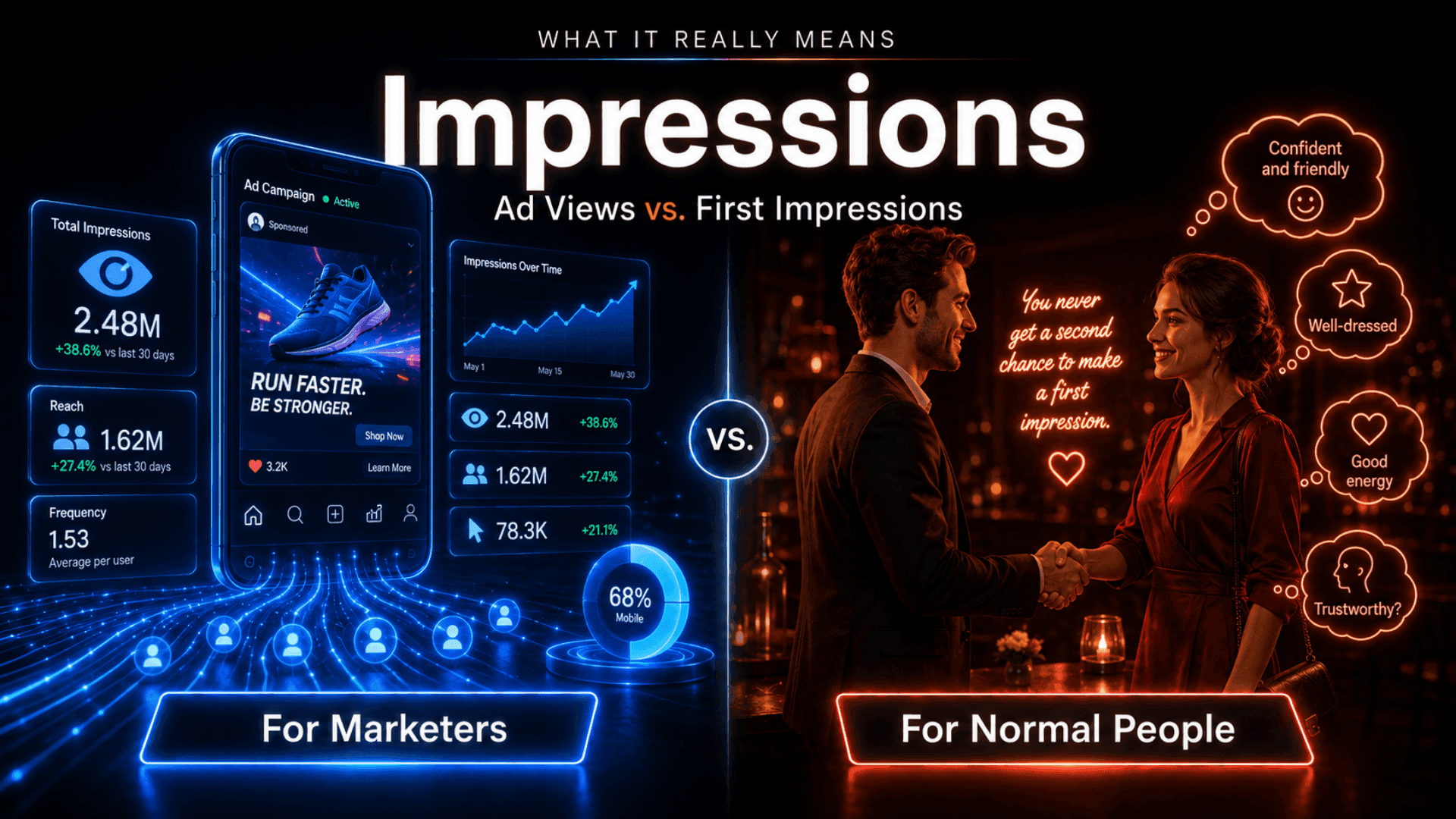
Impressions: Ad Views vs. First Impressions — What It Really Means for Marketers vs. Normal People
Posted by Mary Massoumi |.August 30 2026
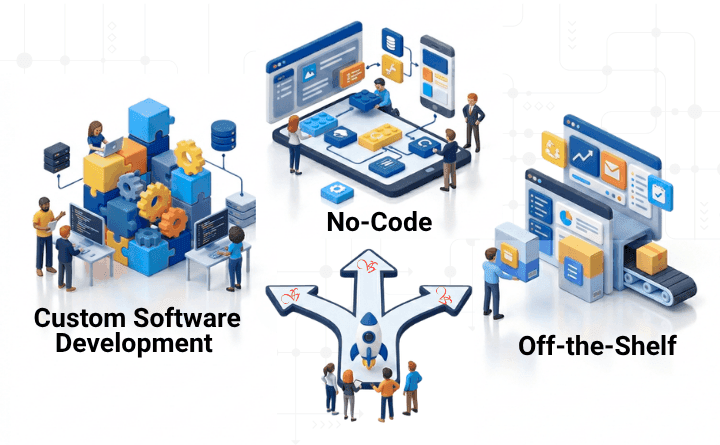
Custom Software Development vs. No-Code vs. Off-the-Shelf: How Startups Should Decide
Posted by Mary Massoumi |.June 11 2026
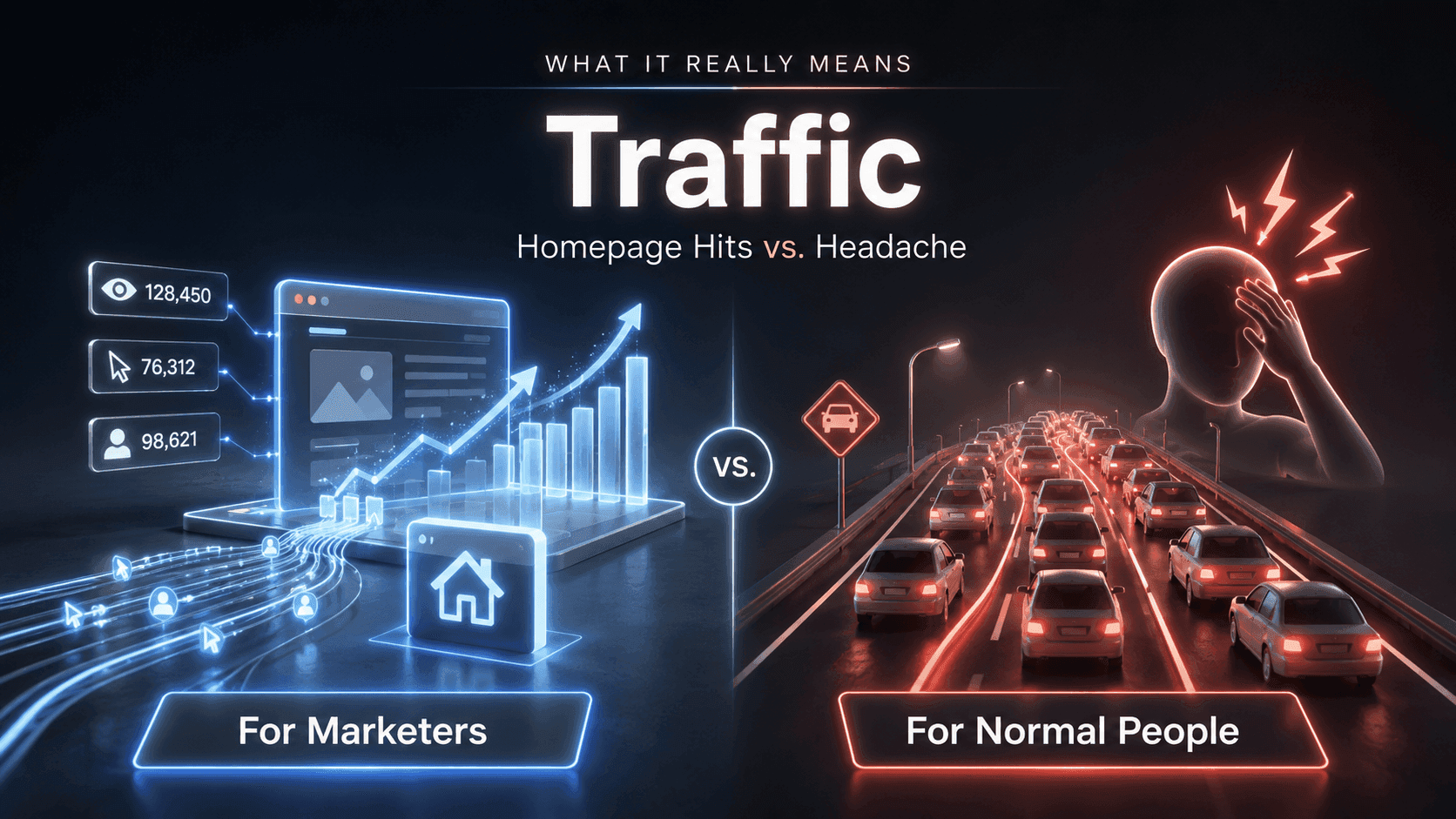
Traffic: Homepage Hits vs.Headache-What It Really Means for Marketers vs. Normal People
Posted by Mary Massoumi |.March 22 2026
You May Also Like
M Powered Ventures supports startups and companies by providing world-class tech expertise.
Impressions: Ad Views vs. First Impressions — What It Really Means for Marketers vs. Normal People
Impressions mean more than ad views. Discover the difference between advertising impressions and real first impressions—and what marketers should measure beyond the numbers.
Mary Massoumi · August 30 2026
Traffic: Homepage Hits vs.Headache-What It Really Means for Marketers vs. Normal People
A marketing director's humorous take on the dual meaning of "traffic" - exploring why marketers celebrate website traffic while everyone else dreads road traffic, plus 2025 web traffic trends and optimization strategies.
Mary Massoumi · March 22 2026 · 3
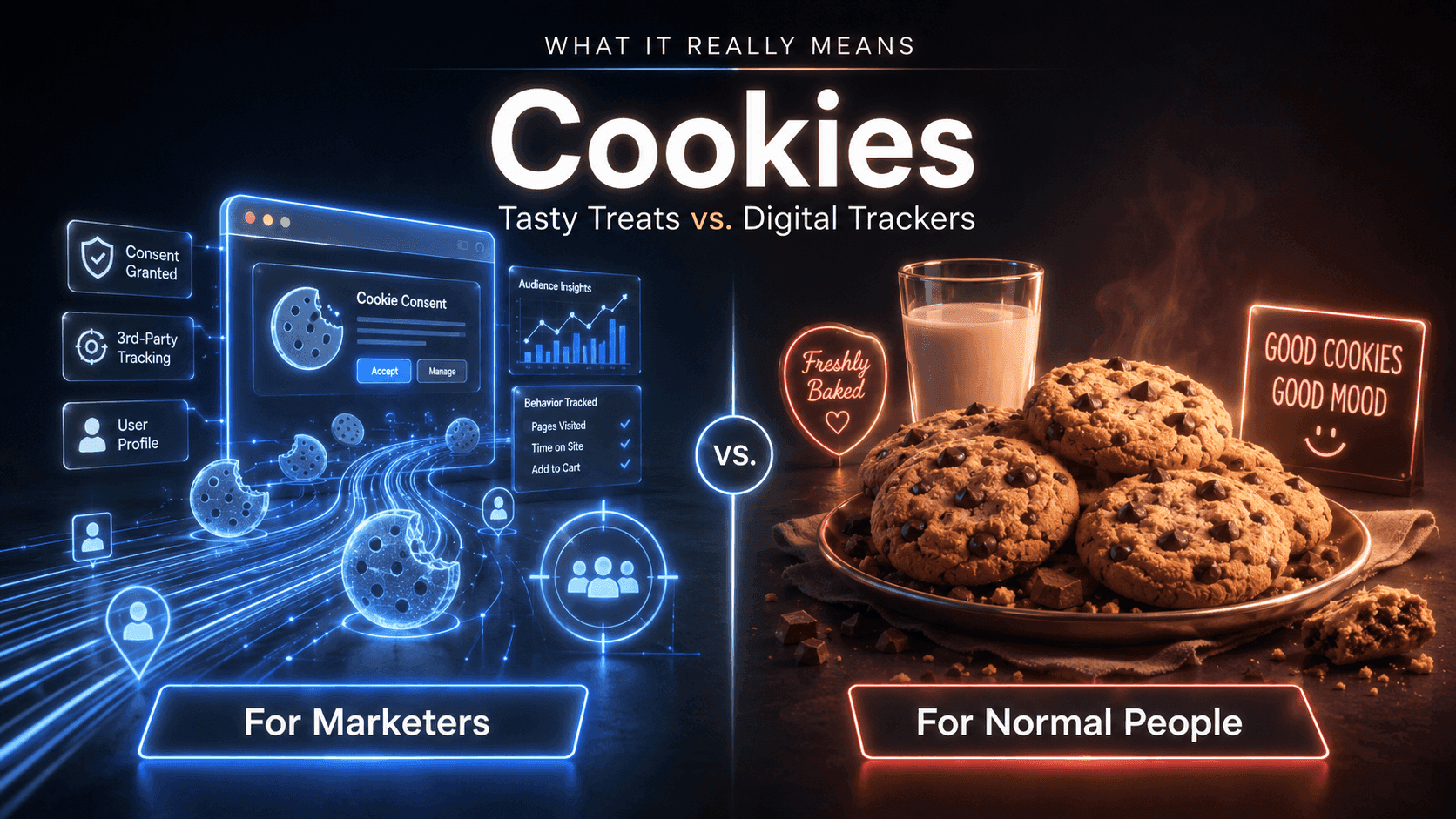
Cookies: Tasty Treats vs. Digital Trackers-What It Really Means for Marketers vs. Normal People
A humorous yet insightful exploration of how marketers and consumers view "cookies" differently. from chocolate chip treats to digital tracking technology, and how the cookieless future is reshaping digital marketing strategies.
Mary Massoumi · March 22 2026 · 7
Have questions about implementing these ideas?
We're here to help.Contact Usfor a free consultation orPitch Your Startupif you're looking for a technical co-founder.
